
No results were found for the filter!
NEW
 GPR139 (IHC-grade), G protein-coupled Receptor...
 The non-phospho-GPR139 receptor antibody is directed against the distal end of the carboxyl-terminal tail of human GPR139. It can be used to detect total GPR139 receptors in Western blots independent of phosphorylation. The GPR139...
375.00 € *
NEW
 GPR139 (non-phospho), G protein-coupled...
 The non-phospho-GPR139 receptor antibody is directed against the distal end of the carboxyl-terminal tail of human GPR139. It can be used to detect total GPR139 receptors in Western blots independent of phosphorylation. The GPR139...
375.00 € *
NEW
 pT315-GPR139 (phospho-GPR139 Antibody)
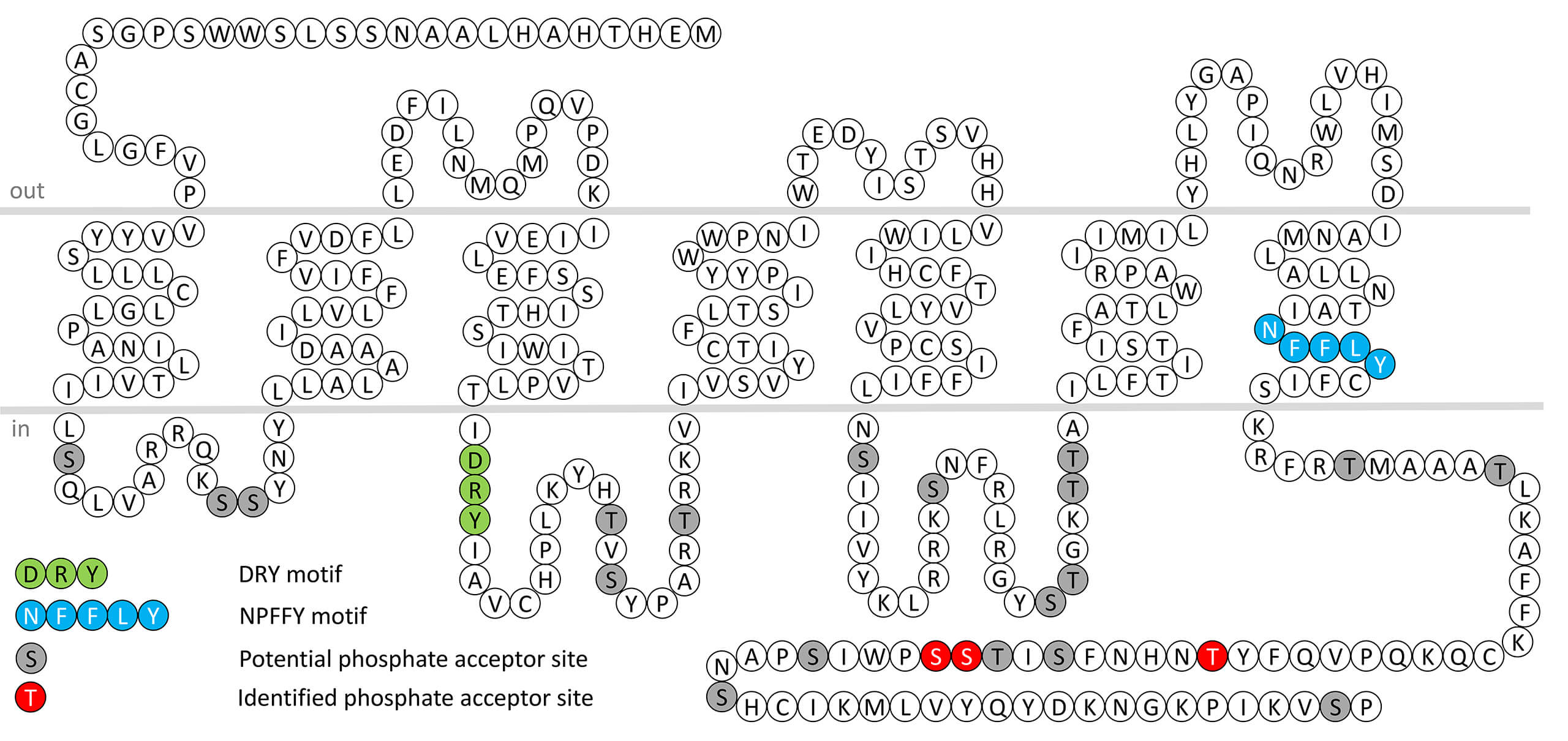
 Threonine315 (T315) is major phosphorylation site of the GPR139 Receptor (GPR139). The pT315-GPR139 antibody detects phosphorylation in response to agonists. T315 phosphorylation is likely to be involved in efficient ligand sequestration.
375.00 € *
NEW
 pS323/pS324-GPR139 (phospho-GPR139 Antibody)
 Serine323/Serine324 (S323/S324) is major phosphorylation site of the GPR139 Receptor (GPR139). The pS323/pS324-GPR139 antibody detects phosphorylation in response to agonists. S323/S324 phosphorylation is likely to be involved in...
375.00 € *
 GPR139 (G Protein-Coupled Receptor 139) is an orphan GPCR believed to be activated by L-tryptophan and L-phenylalanine, as well as synthetic agonists. It primarily signals through Gq proteins, influencing intracellular calcium signaling. GPR139 is predominantly expressed in the central nervous system, especially in the habenula, hypothalamus, pituitary, and striatum—regions associated with neuroendocrine function, mood regulation, and reward processing. GPR139 is considered a promising pharmacological target for neurological and psychiatric disorders, including schizophrenia, Parkinson’s disease, addiction, and depression. Its restricted CNS expression and involvement in monoaminergic pathways make it an attractive candidate for drug development. Several selective agonists have been developed in preclinical studies, and research is ongoing to evaluate its therapeutic potential. For more information on GPR139 pharmacology please refer to the
 Recently viewed